Insights
Why Identifying Promoter Group Members Early Can Make or Break Your IPO Timeline

Every IPO begins with an exercise that sounds deceptively simple: identifying the promoter group. Under Securities and Exchange Board of India (Issue of Capital and Disclosure Requirements) Regulations, 2018 (the “SEBI ICDR Regulations”), the definition of a promoter group is intentionally broad and far-reaching.
Fixed-Term Employment Under the Labour Codes: Balancing Workforce Flexibility and Employee Protection
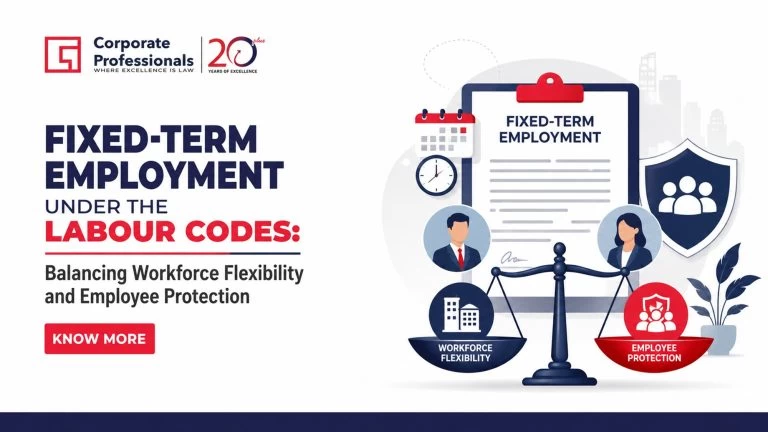
Fixed-Term Employment (“FTE”) is one of the most significant employment models recognised under the Labour Codes. It allows an employer to engage an employee directly for a specified period
Draft RBI (NBFC-Responsible Business Conduct) Directions, 2026-Key Amendments
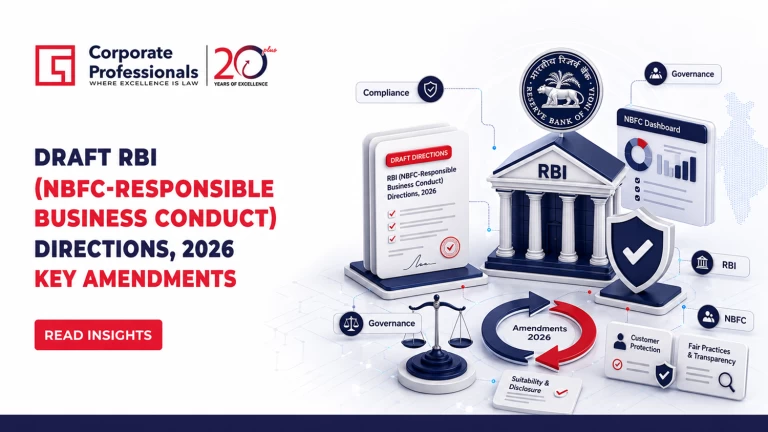
The Reserve Bank of India (“RBI”) has issued the Draft Responsible Business Conduct Directions, 2026 (“Draft Directions”) on May 20, 2026, proposing conduct-related obligations, standardize recovery practices and enhance accountability for Non-Banking Financial Companies (“NBFCs”) and their recovery agents.
RBI Draft Compliance Functions Directions, 2026-NBFCs
The Reserve Bank of India (“RBI”), as part of its broader effort to strengthen governance standards for Non-Banking Financial Companies (“NBFCs”), had earlier issued the circular on “Compliance Function and Role of Chief Compliance Officer
Final OSH Rules: Key Changes Employers Should Note

The Occupational Safety, Health and Working Conditions (Central) Rules, 2026 mark an important step in operationalising the OSH Code. Compared with the draft rules, the final rules appear to focus on simplification,
Demystifying the IPO Lock-in Framework under the SEBI ICDR Regulations

Every IPO transaction carries a lock-in obligation, and, in the experience of most practitioners, it receives less analytical attention than it deserves. Lock-in is frequently approached as a disclosure exercise: a set of periods to be identified and recorded in the offer document. That approach is risky.
Code on Wages (Central) Rules, 2026: Key Deviations from the Draft Rules and What Central-Sphere Employers Must Know
These Rules are Central Rules and therefore apply to establishments for which the Central Government is the “appropriate Government” under the Code on Wages, 2019. This includes establishments carried on by or under the authority of the Central Government,